U.N. emigration-and-android law
The U.N. emigration-and-android law is the foundational legal and ideological apparatus of the post-World War Terminus world, designed to drive human emigration to colony planets by pairing the incentive of a free android servant with the coercive threat of radioactive fallout and biological classification as a 'special.' It simultaneously creates the android as a legally owned commodity, the bounty hunter as its enforcer, and the moral crisis at the heart of the novel.
Structure and Incentives
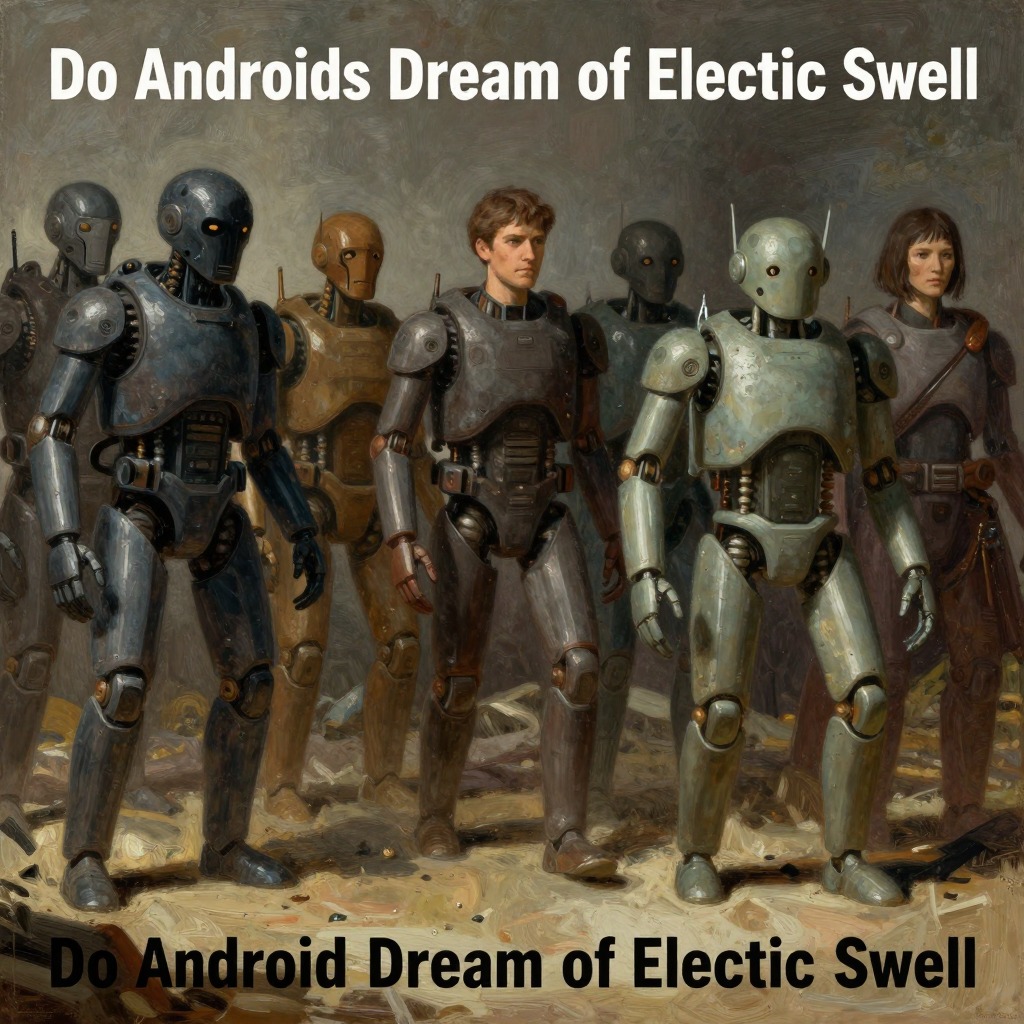
The law operated on a dual mechanism of carrot and stick. Under U.N. law, each emigrant automatically received possession of an android subtype of his choice, a humanoid robot modified from the wartime Synthetic Freedom Fighter to function as a mobile laborer on alien worlds. By 1990, the variety of subtypes had proliferated beyond all understanding, in the manner of American automobiles of the 1960s. The android servant was the ultimate incentive for emigration, while the radioactive fallout that had contaminated most of the planet's surface served as the stick. The U.N. made it easy to emigrate and difficult if not impossible to stay. Loitering on Earth potentially meant finding oneself abruptly classed as biologically unacceptable, a menace to the pristine heredity of the race. Once pegged as a special, a citizen, even if accepting sterilization, dropped out of history and ceased to be part of mankind.
Enforcement and Consequences
The law's enforcement was pervasive and inescapable. The saying currently blabbed by posters, TV ads, and government junk mail ran: "Emigrate or degenerate! The choice is yours!" The dust that had originated in no country and no one had planned on it, first killing the owls, then the other birds, and finally threatening the genetic integrity of those who remained. Medical checkups taken monthly confirmed a man as a regular who could reproduce within the tolerances set by law, but any month the exam by the San Francisco Police Department doctors could reveal otherwise. Continually, new specials came into existence, created out of regulars by the omnipresent dust. The law thus transformed biological survival into a legal status subject to constant surveillance and revocation.
The Android as Commodity
The law defined the android not as a person but as property, a legal object granted to emigrants. The Rosen Association, the system's largest manufacturer of humanoid robots, produced what the colonists wanted, following the time-honored principle underlying every commercial venture. The Nexus-6 brain unit represented the culmination of this commercial evolution, creating androids so advanced that they could pass as human. The law's framework, however, made no provision for the android's own desires or rights. When androids killed their masters and fled to Earth, they became illegal aliens subject to "retirement" by bounty hunters, a killing that was legally distinct from murder because the victim was not human. The bounty system paid a thousand dollars per android, over and above the hunter's salary, creating a direct financial incentive for the destruction of these escaped beings.
Ideological Function and Critique
The law was inextricably linked to the ideology of Mercerism, which held that all life was sacred and that "you shall kill only the killers." For bounty hunter Rick Deckard, an escaped humanoid robot that had killed its master, that had been equipped with an intelligence greater than that of many human beings, that had no regard for animals, that possessed no ability to feel empathic joy for another life form's success or grief at its defeat — that epitomized The Killers. The law thus provided a moral framework that made the killing of androids not only legal but righteous. Yet the novel systematically undermines this framework. The Rosen Association, in defending its products, argues that the Voigt-Kampff test may have retired authentic humans with underdeveloped empathic ability, and that the police department's position is "extremely bad morally." The law's neat categories — human versus android, regular versus special, legal emigrant versus illegal alien — prove increasingly unstable as the narrative progresses, culminating in Deckard's own crisis of conscience and his inability to distinguish his empathy for androids from his love for a human woman.
The Law's Victims
The law created a class of beings — the androids — who were biologically organic, intelligent, and capable of suffering, yet legally nonexistent as persons. They could not own property, could not will anything, and had a lifespan of only about four years due to unsolved cell replacement problems. The law also trapped humans on Earth: those who could not emigrate, like the chickenhead John Isidore, were left to deteriorate in the radioactive dust, their very existence a reminder of the law's coercive power. The law's ultimate irony is that it produced the very beings it could not control — the Nexus-6 androids who, in their flight to Earth, exposed the law's contradictions and forced those who enforced it to confront the moral emptiness at its core.